Act 22 of 2012

Puerto Rico's History

hold

Puerto Rico (Spanish for 'rich port'; abbreviated PR; Taino: Borikén or Borinquen), officially the Commonwealth of Puerto Rico[b] (Spanish: Estado Libre Asociado de Puerto Rico, lit. 'Free Associated State of Puerto Rico'), is a Caribbean island, Commonwealth, and unincorporated territory of the United States. It is located in the northeast Caribbean Sea, approximately 1,000 miles (1,600 km) southeast of Miami, Florida, between the Dominican Republic and the U.S. Virgin Islands, and includes the eponymous main island and several smaller islands, such as Mona, Culebra, and Vieques. With roughly 3.2 million residents, it is divided into 78 municipalities, of which the most populous is the capital municipality of San Juan. Spanish and English are the official languages of the executive branch of government, though Spanish predominates.

hold

Puerto Rico was settled by a succession of peoples beginning 2,000 to 4,000 years ago; these included the Ortoiroid, Saladoid, and Taíno. It was then colonized by Spain following the arrival of Christopher Columbus in 1493. Puerto Rico was contested by other European powers, but remained a Spanish possession for the next four centuries. An influx of African slaves and settlers primarily from the Canary Islands and Andalusia vastly changed the cultural and demographic landscape of the island. Within the Spanish Empire, Puerto Rico played a secondary but strategic role compared to wealthier colonies like Peru and New Spain. By the late 19th century, a distinct Puerto Rican identity began to emerge, centered around a fusion of indigenous, African, and European elements. In 1898, following the Spanish–American War, Puerto Rico was acquired by the United States.

hold

Puerto Ricans have been U.S. citizens since 1917, and can move freely between the island and the mainland. However, when resident in the unincorporated territory of Puerto Rico, Puerto Ricans are disenfranchised at the national level, do not vote for the president or vice president, and generally do not pay federal income tax. In common with four other territories, Puerto Rico sends a nonvoting representative to the U.S. Congress, called a Resident Commissioner, and participates in presidential primaries; as it is not a state, Puerto Rico does not have a vote in Congress, which governs it under the Puerto Rico Federal Relations Act of 1950. Congress approved a local constitution in 1952, allowing U.S. citizens residing on the island to elect a governor. Puerto Rico's current and future political status has consistently been a matter of significant debate.

Beginning in the mid-20th century, the U.S. government, together with the Puerto Rico Industrial Development Company, launched a series of economic projects to develop Puerto Rico into an industrial high-income economy. It is classified by the International Monetary Fund as a developed jurisdiction with an advanced, high-income economy; it ranks 40th on the Human Development Index. The major sectors of Puerto Rico's economy are manufacturing (primarily pharmaceuticals, petrochemicals, and electronics) followed by services (namely tourism and hospitality).

Overview

hold

Act 22 of 2012 —also known as the Act to Promote the Relocation of Investors to Puerto Rico (Spanish: Ley para Incentivar el Traslado de Inversionistas a Puerto Rico)— is an act enacted by the 16th Legislative Assembly of Puerto Rico that exempts local taxes on certain passive income generated by individuals that reside in Puerto Rico. To ignite the interest of these new investors, Act 22 provides an exemption from Puerto Rico income taxes on certain types of passive income attained or accrued after the individual establishes residency. As of March 2013 only about a dozen individuals have taken advantage of the act, although many others have expressed their interest after the media reported that billionaire John Paulson was considering to relocate to Puerto Rico. The report was later denied by Paulson but media coverage increased inquiries to local accountancy firms by 400% after the story broke. Act 22 is one of a set of economic incentives that the Government of Puerto Rico has developed for the development of the Island's economy. Additional incentives offer unique benefits to investors for sectors like manufacturing, hospitality and tourism, international insurance and banking, export services, and agriculture.

Requirements

Benefits

Consequences

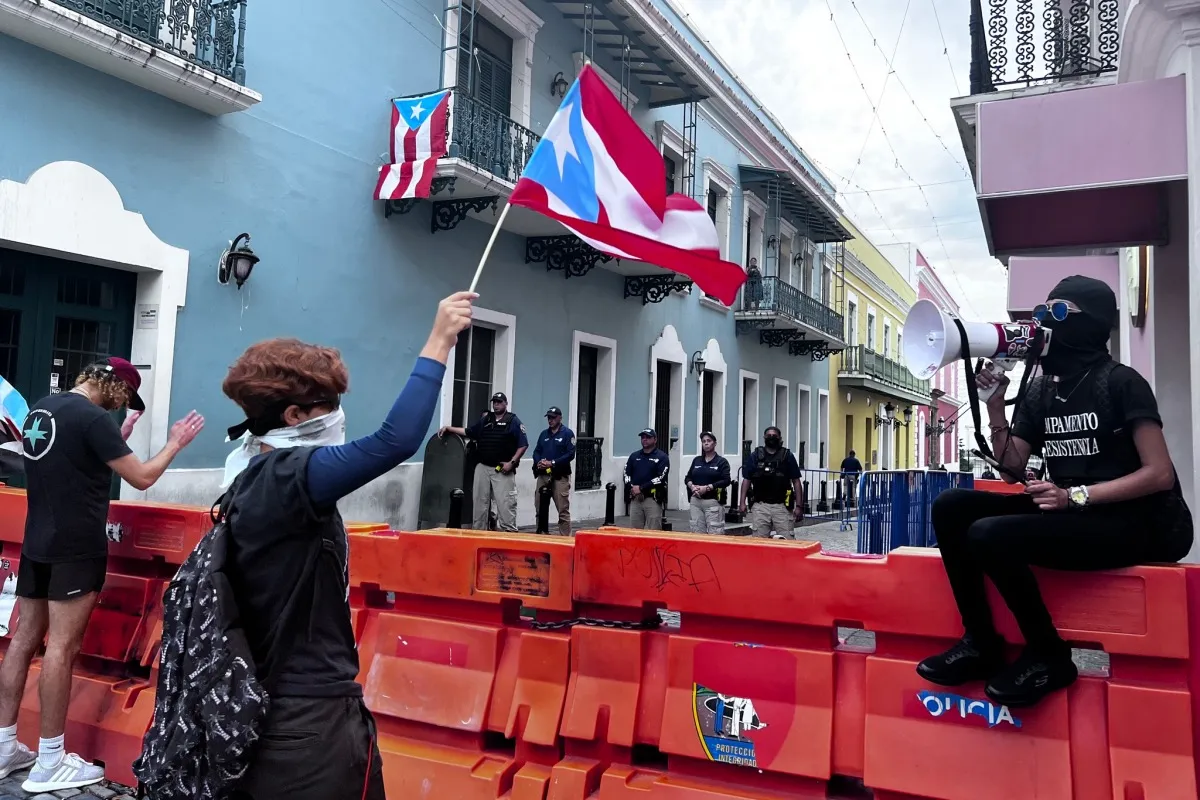
The act has come under criticism. In early 2021, in the aftermath of the victory for statehood in the 2020 statehood referendum, Act 22 emerged as a stumbling-block to Puerto Rico statehood. Senate Majority leader Chuck Schumer declared opposition to a pro-statehood bill and criticized Act 22. Some claim the act was enacted to promote the displacement of Native Puerto Rican Citizens from the island in hope of exhibiting further colonialist control over Puerto Rico. Skeptics include Jeffrey Farrow, a former White House official from the Clinton administration, and John Buckley, a former tax counsel for the Democratic Party on the United States House Committee on Ways and Means, who have described the act as a way to make Puerto Rico a tax haven. Congressmen Chuck Grassley (R-Iowa) and Max Baucus (D-Montana), Chairman of the United States Senate Finance Committee, have also expressed their opinion on the matter. Others, however, such as José Pérez Riera and Alberto Bacó Bagué, both former Secretary of Economic Development and Commerce of Puerto Rico, and current Secretary Manuel A. Laboy Rivera, see the act favorably and describe it as being a way for Puerto Rico to overcome its economic struggles and its six years long recession.

The Puerto Rico Act 22 tax loophole was sold as an economic boost in the shadow of a recession.

Instead, wealthy investors, speculators, and influencers like Logan Paul are part of a new generation of tax-evading gentrifiers flocking to the island and displacing Puerto Ricans.

The Puerto Rico Act 22 tax loophole was sold as an economic boost in the shadow of a recession.

Instead, wealthy investors, speculators, and influencers like Logan Paul are part of a new generation of tax-evading gentrifiers flocking to the island and displacing Puerto Ricans.